
03 Bonds
Have Bonds Met Their Dr No?
Government bonds are unloved as their yields rise.
4 min read · Portfolio Thinking Annual Outlook 2027
Key takeaway 1
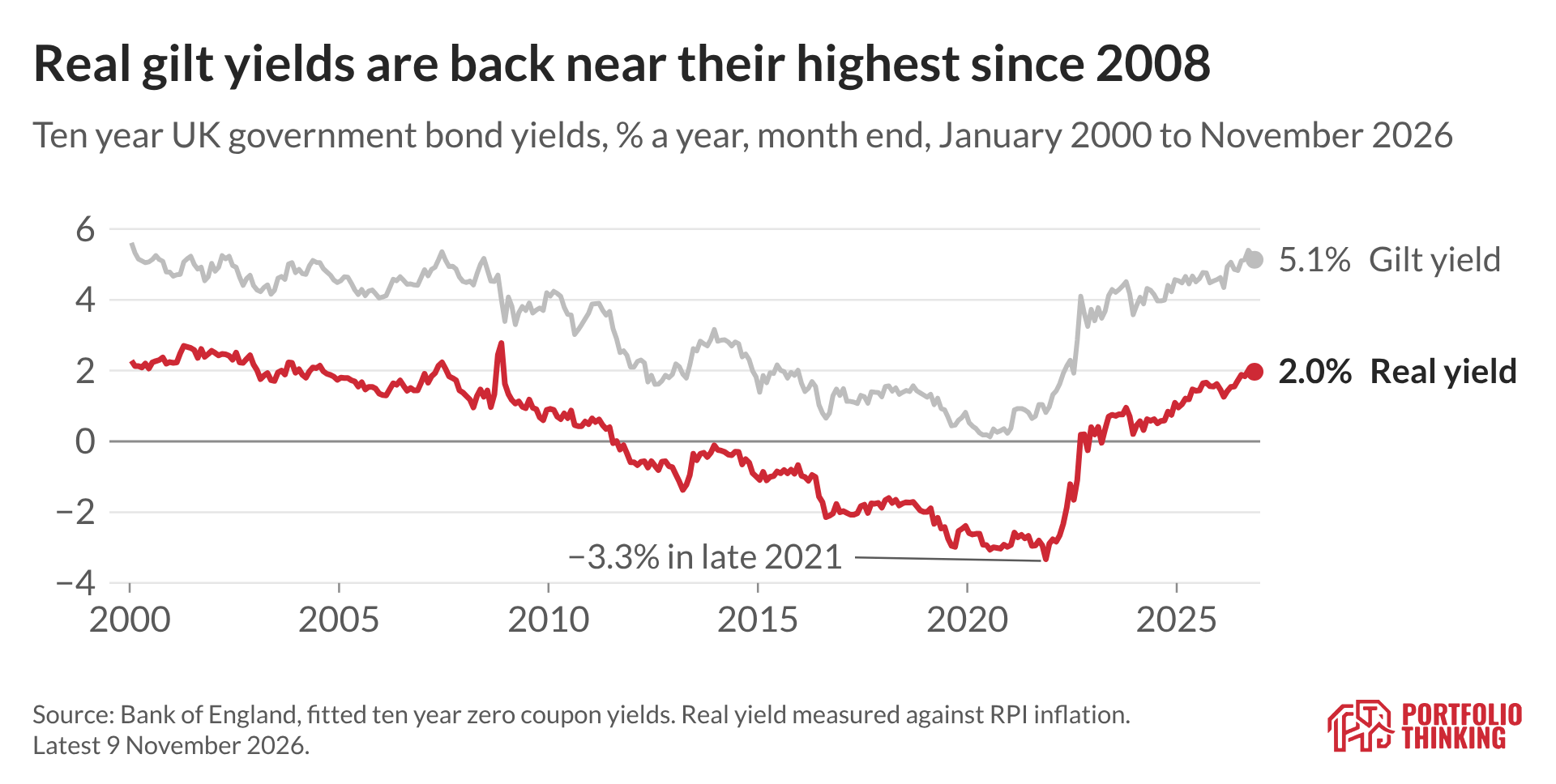
A ten year gilt currently yields approximately 2% a year above expected inflation. This is unusually attractive by the standards of the years since 2008.
Key takeaway 2
Long term inflation expectations have barely moved this year. Instead, investors demand a bigger reward above inflation for lending to governments that borrow heavily.
Key takeaway 3
Corporate bonds pay little extra for their risk; in the US, close to the least in thirty years. Investors are being paid to lend, not to take credit risk.
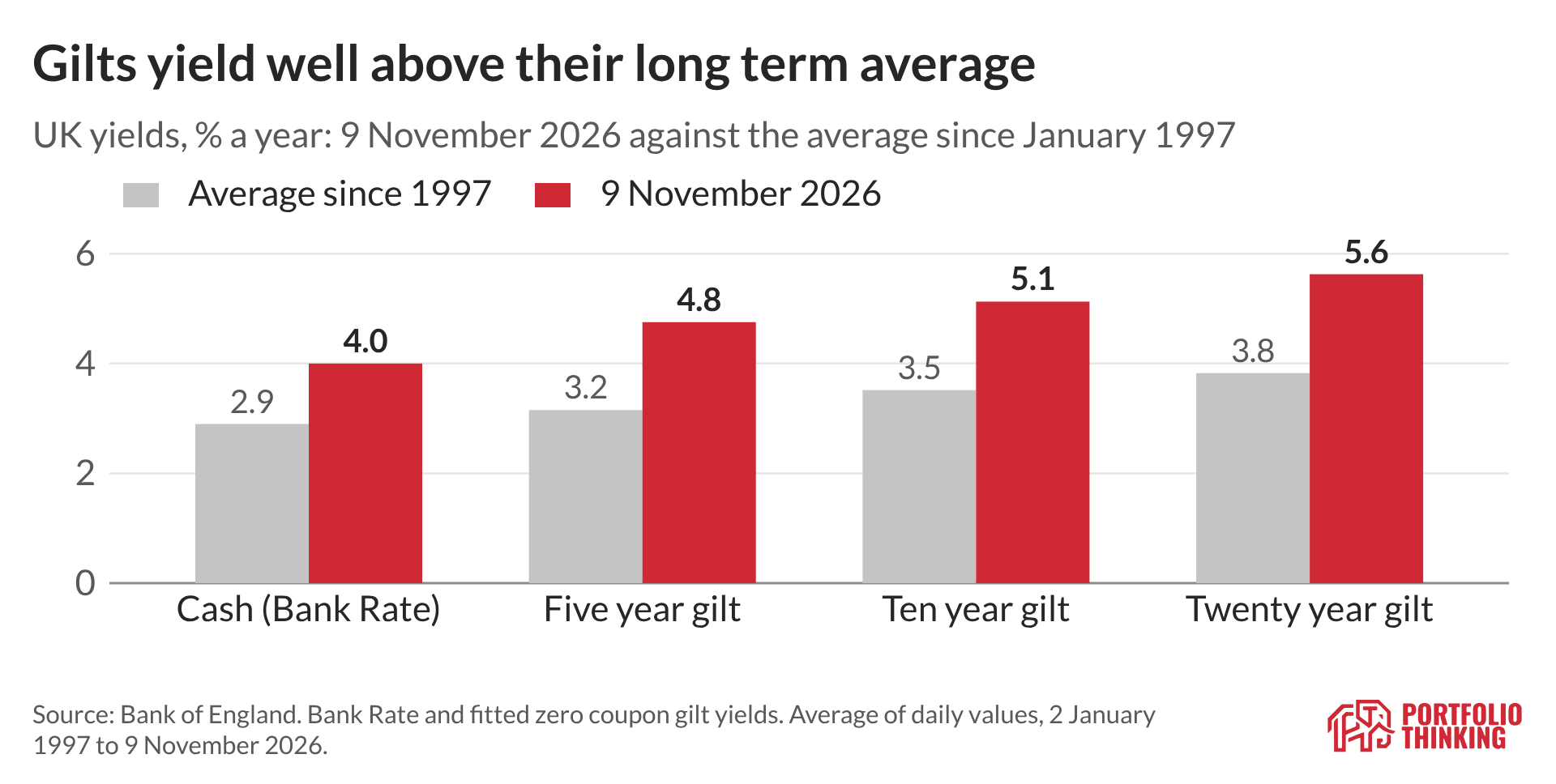
High quality government bonds are the most attractive they have been in almost twenty years. A ten year gilt yields about 5.1%, roughly 2% a year more than expected inflation. Gilts of every maturity now yield well above their average since 1997, and further above it than cash.
However, they are currently being shunned by many investors concerned about the sustainability of government finances and the higher correlation of bond and share prices in the post Covid period.
At the heart of almost every Bond film is a moment when the hero appears to be finished. For government bonds, that moment came in 2022, and many investors have been saying no to them ever since. Yet the fall in prices that hurt bondholders is also what has lifted their yields to today’s levels. Like the hero before the final act, government bonds have been written off too soon.
Paid to lend again
We entered 2026 with most commentators expecting interest rates to fall. Then the attack on Iran sent the price of energy sharply higher, and the Federal Reserve and the European Central Bank raised rates. In November, the Bank of England followed, raising its rate to 4%, and it now expects inflation to peak at around 5% in the middle of 2027.
Bond yields rose, and many investors concluded that yields rose because of inflation and expect them to decline when inflation does.
The data suggests otherwise; as in any Bond plot, the obvious explanation is rarely the whole story. To understand why, it helps to split a government bond’s yield into two parts: compensation for the inflation expected over its life, and the real reward for lending on top.
While many investors have worried about the first, it is the second part that explains the rise in yields since 2021. In both the US and the UK, the inflation investors expect in five to ten years’ time is about where it was in January.
It is the real reward that has risen. In late 2021 a ten year gilt yielded 3% a year less than expected inflation. Today it yields about 2% more.
Why lenders want more
Lenders want to be paid for the same worry that is keeping many investors away: how much governments need to borrow, and how confident lenders can be of being repaid in money that holds its value.
The US ran a deficit of about 6% of national income in the year to September and now spends more on interest payments than on defence. In Britain, the gilt market has become the first judge of every Budget.
In our view, that worry is not a reason to avoid government bonds; it is the reason they now pay more. And because none of this is about oil, higher real yields may persist even when the conflict in the Middle East ends.
Higher government bond yields matter for shares too. When lending to governments pays more, every other investment has to offer more too, including shares. That is why shares and bonds can fall together when real yields rise.
Paid to lend, not to take credit risk
The recent rise in yields does not make every bond attractive. Corporate bond yields look generous only because government yields are generous.
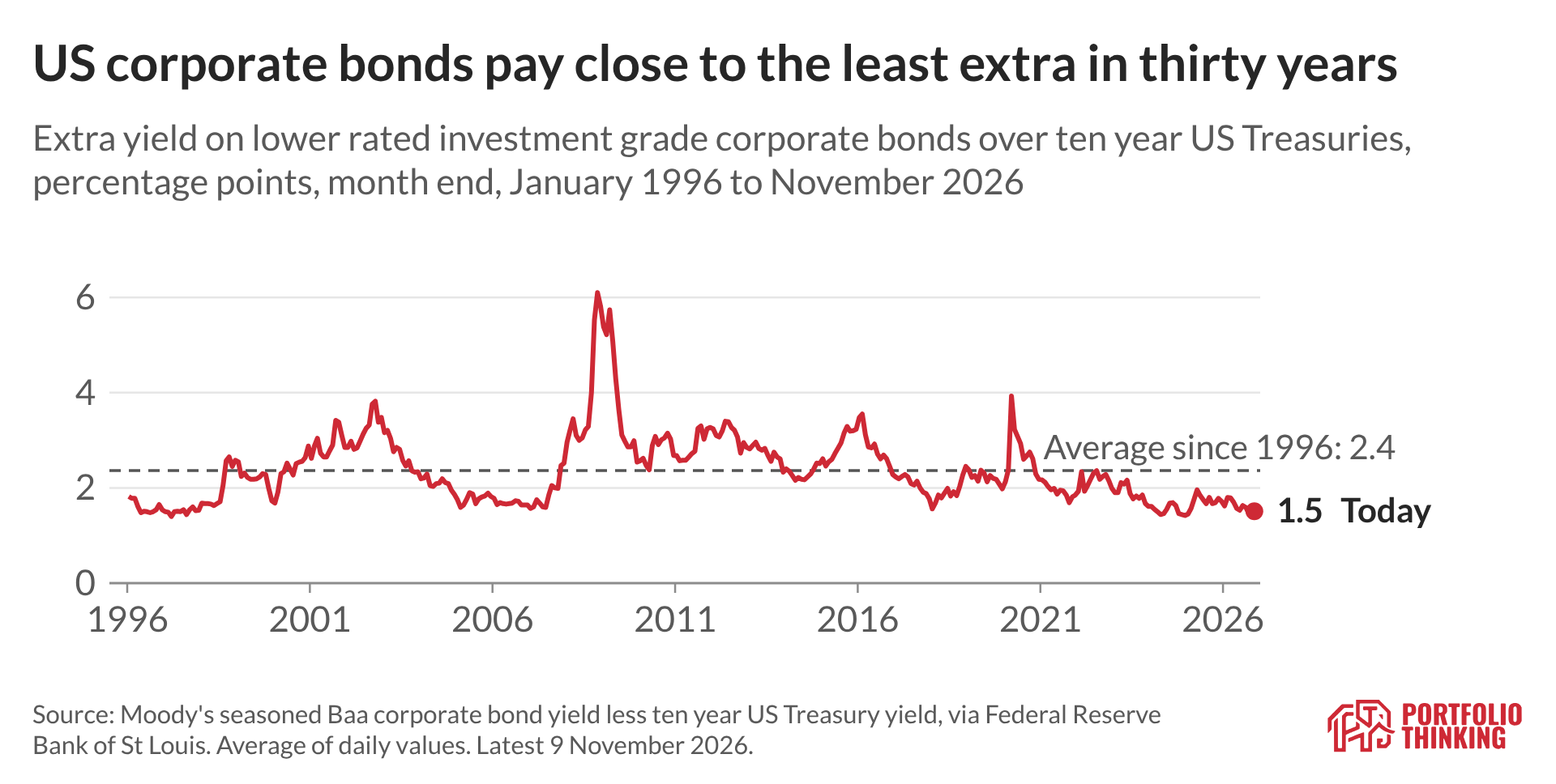
In the US, the extra yield for lending to a company rather than the government is close to its lowest in thirty years: lower rated investment grade corporate bonds pay about 1.5 percentage points over Treasuries, against an average of 2.4 percentage points since 1996. On our latest estimates, sterling investment grade bonds pay about 1 percentage point over gilts, against the 1.35 percentage points our valuation work suggests is fair.
Corporate bonds also tend to fall with shares when markets are under stress, so they protect less than government bonds when it matters. In this market, investors are being paid to lend but not to take credit risk.
Taking a starring role
Government bonds tend to rise when shares fall on fears of recession, but not when the worry is inflation. That protection is now a bonus rather than the main reason to own them. In our view, a gilt’s yield justifies owning it for the return alone.
So while we can be confident that bonds will defeat their Dr No, the path is never obvious and they may suffer further injuries along the journey.
Three ideas for portfolios
General ideas for advisers to consider against each client’s objectives and circumstances; not personal recommendations.
- 1
Let government bonds earn their place.
Where bond allocations were cut after 2022, consider rebuilding towards their long run weight. At today’s yields, high quality government bonds can play a return role, not only a defensive one. If real yields rise further, longer dated bonds will fall in price before they mature.
- 2
Match maturity to need.
Where a client has known spending in the years ahead, individual gilts held to maturity fix today’s yield in pounds. For individuals holding gilts directly, low coupon gilts return much of their yield as a capital gain, which is free of capital gains tax.
- 3
Keep credit risk modest.
With corporate bonds paying little extra, favour government and higher quality bonds over lower quality credit, and keep room to add when extra yield returns towards fair value.
For professional intermediaries only. This outlook reflects Portfolio Thinking's views at the time of writing and is not a forecast, a recommendation or personal advice. Expected returns are estimates, not guarantees; the value of investments can fall as well as rise.